Our Services

Concrete Leveling & Slab Lifting

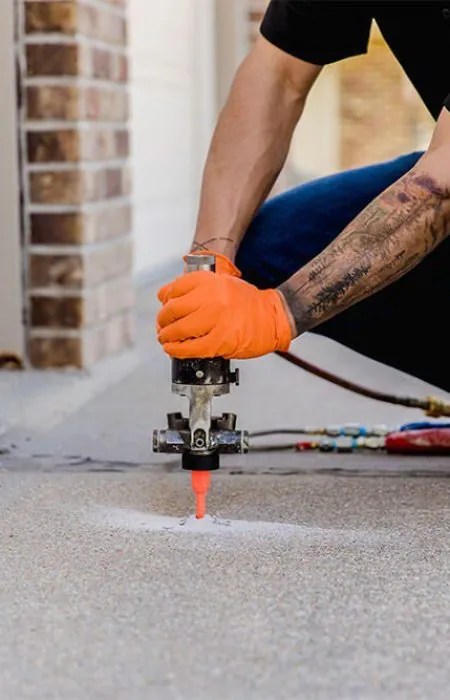
When a slab sinks, the concrete is usually fine — the soil beneath it washed out or consolidated. Polyurethane foam injection fills that void, lifts the slab back to grade through dime-sized ports, and cures hard enough to drive on within a couple of hours.

Technician injecting polyurethane foam through a port drilled in a settled concrete slab

Why foam beat mudjacking and we stopped offering it

Mudjacking pumps a cement slurry under the slab to float it back up. It works, but the slurry weighs well over a hundred pounds per cubic foot — you are adding significant load to the exact soil that already proved it could not carry the slab. It needs days to cure, the injection holes are large enough to see from the street, and over years the slurry can wash out and let the slab drop again.

Polyurethane weighs roughly two pounds per cubic foot. It expands to fill every void in the soil, it is waterproof so it will not erode, the ports are about the diameter of a dime, and it reaches most of its final strength within fifteen minutes. There is no scenario on a residential driveway where we would choose slurry over foam.
How we decide between lifting and replacing

Lifting works when the concrete is still structurally sound and the only problem is that it sank. Clean breaks, minimal surface spalling, edges still square — that slab will come back up and stay there.

Replacement is the honest answer when the slab has failed as concrete: heavy spalling exposing aggregate, crumbling edges, or a network of intersecting cracks that has broken it into pieces which no longer act as one unit. Lifting a slab in that condition produces a level pile of broken concrete. We will tell you which one you have, and we pour and finish replacement concrete ourselves when that is the right call.

It is usually a drainage problem wearing a concrete costume

A driveway apron that dropped an inch and a half did not do that because concrete is weak. It did it because roof water has been running under the edge of the slab for eleven years and carrying the fines out of the soil. We lift the slab and then fix the reason — extend the downspout, correct the pitch, seal the joint at the garage — so the void does not re-form. Foam alone with no drainage correction is a temporary fix and we will say so.

What this typically costs

Foam lifting typically runs $4–$8 per square foot with a minimum job size. A settled two-car driveway apron is usually $1,800–$3,500 versus $8,000–$15,000 for tear-out and replacement.

Signs you should have this looked at

  • A driveway or sidewalk section that has dropped below its neighbor
  • A patio or pool deck pulling away from the house
  • Water pooling on a slab that used to drain
  • A garage floor sloping toward the door or away from it
  • Trip hazards at sidewalk joints
  • A hollow sound when you tap the slab, indicating a void beneath

Concrete Leveling & Slab Lifting work across Northwest Arkansas

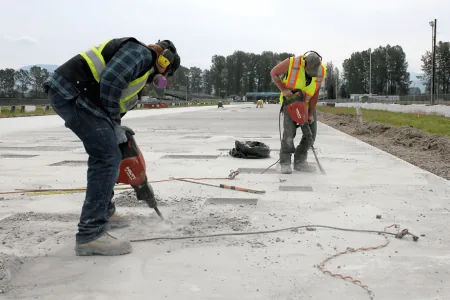
Crew cutting and preparing a settled concrete slab section on a commercial site
Commercial slab work scheduled around your operating hours.
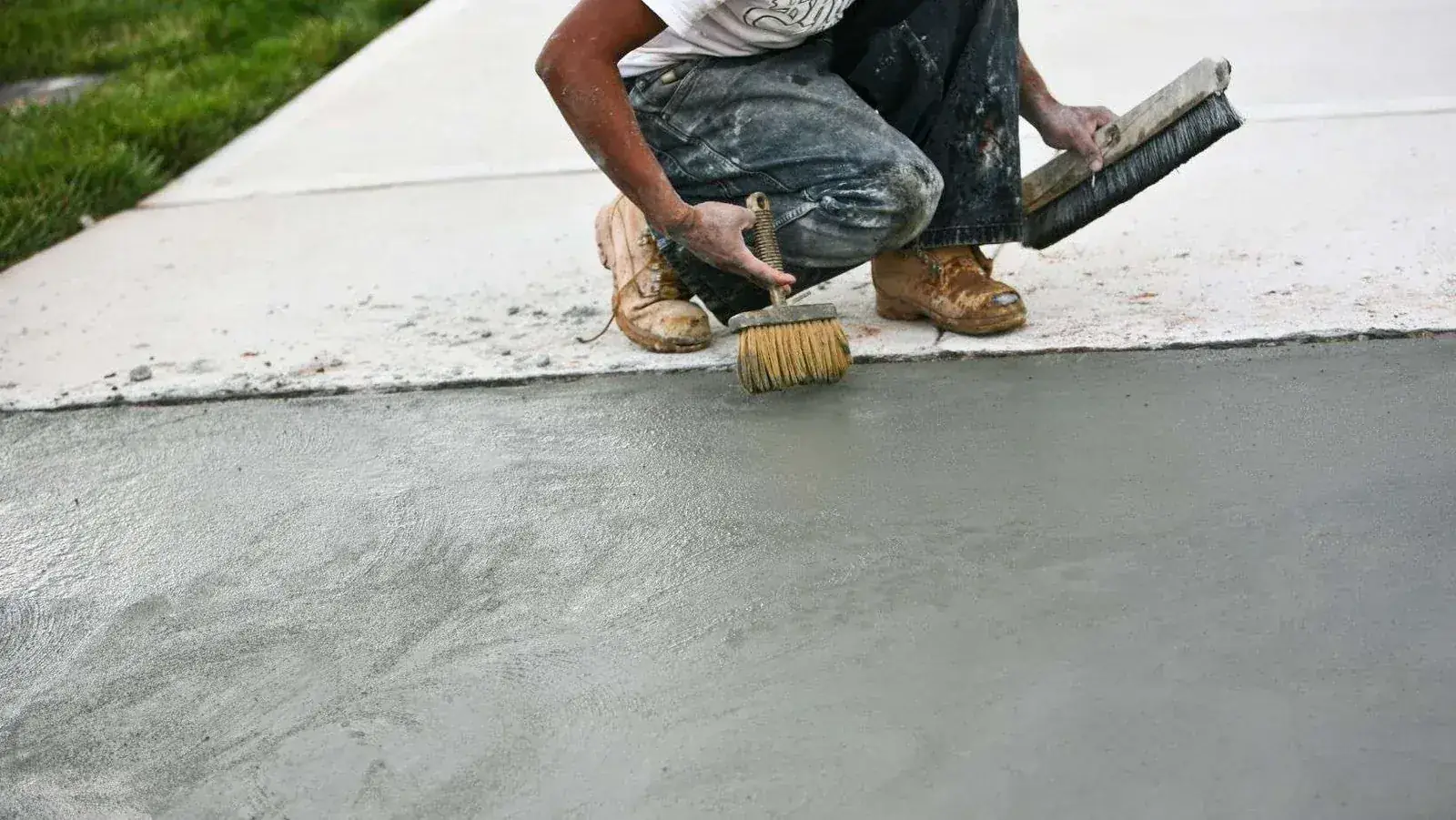
Worker broom-finishing freshly placed concrete on a residential driveway
When a slab is past saving, we replace and finish it properly.
Sunken concrete driveway section lifted back level against the garage apron
A settled apron lifted back flush — no tear-out, no new concrete.

Concrete Leveling & Slab Lifting by city

Soil, drainage and housing stock change from one NWA city to the next, and so does the right repair. Pick your city for the local detail.

Concrete Leveling & Slab Lifting — Questions We Get Asked

Is polyurethane foam really better than mudjacking?

For nearly every job, yes. Foam weighs about two pounds per cubic foot against a hundred-plus for mud slurry, so it does not add load to the weak soil that caused the settlement. Injection ports are dime-sized instead of quarter-sized, foam is waterproof and will not wash out, and it cures in about fifteen minutes rather than days.

How soon can I use the surface again?

Foot traffic roughly fifteen minutes after injection. Vehicle traffic on a driveway the same day, usually within about two hours. Heavy equipment or refilling a pool the next day. The polyurethane reaches most of its final strength within minutes, which is the main practical advantage over slurry.

When does replacement make more sense than lifting?

Replace when the concrete has failed as concrete — heavy spalling exposing aggregate, crumbling edges, or a network of intersecting cracks that has broken the slab into pieces no longer acting as one unit. Lifting an already-failed slab just gives you a level pile of broken concrete, and we will tell you that rather than sell the foam job.

Can foam injection damage pool plumbing or landscaping?

Not when it is done by a crew that maps first. We locate utilities and pool plumbing before drilling, place ports away from those runs, and control expansion in real time by monitoring lift as we inject. Foam placed correctly near pools and patios does not harm liners or coping.

What surfaces can you lift?

Driveways and aprons, sidewalks, patios, pool decks, garage floors, basement floors, porch steps and interior slabs. If a slab has sunk, settled or opened a trip hazard, foam injection can usually bring it back to grade.

Other services we provide

Not sure what your foundation actually needs?

Start with a free inspection. You get elevation measurements, photographs, a plain explanation of the cause and a fixed written price — with no obligation to hire us.