Our Services

Seamless Gutters & Foundation Drainage

A thousand square feet of roof sheds about 600 gallons in a one-inch rain. Where that water lands decides whether your foundation stays put. Gutters are the least glamorous thing we sell and the highest return on investment on this page.

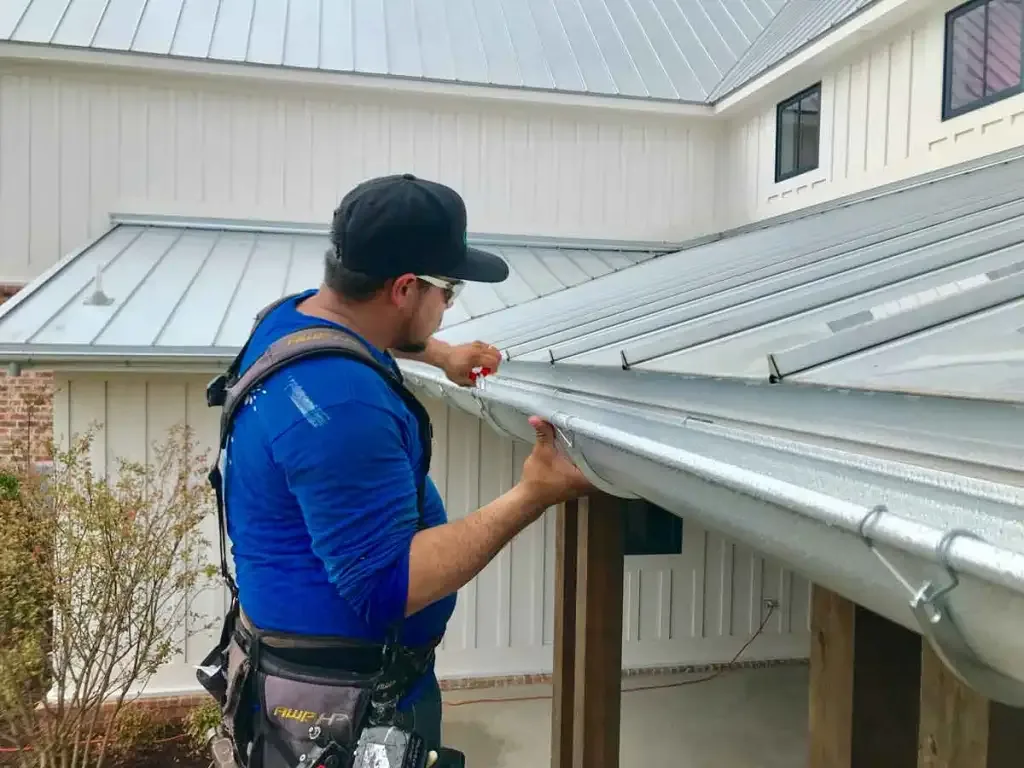
Installer fastening a new seamless metal gutter along the fascia of a residential roofline

Sized to your roof, not to a standard truck load

Most Northwest Arkansas homes are well served by 6-inch K-style aluminum gutters with 3x4 downspouts. That combination handles the short, intense storms this region gets without overshooting the front lip. Steep roofs, long unbroken runs and large drainage areas sometimes justify 7-inch gutter with oversized outlets.

We measure roof area and pitch before quoting. A 5-inch gutter on a steep 40-foot run will overflow in every serious storm no matter how clean it is, and that overflow lands in a concentrated line right against your foundation.
The downspout is the part that matters

Perfect gutters that discharge eighteen inches from the wall are actively hurting you — they collect the whole roof and deliver it to one spot against the footing. We extend discharge at least four to six feet out, farther on hillside lots, and where the grade will not cooperate we bury solid drain line to daylight or to a pop-up emitter well away from the structure.

This is the single most cost-effective foundation work available. We routinely inspect houses where correcting two downspouts and re-grading a flower bed would have prevented the pier job the homeowner is now considering.

Guards, cleaning and being honest about both

If you have trees overhead, micromesh guards are worth it — they cut cleanings from twice a year to roughly every other year and they block pine needles and shingle grit, which cheap screen guards do not. If you are on an open lot with nothing overhanging the roof, you do not need guards and we will say so.

Either way, gutters need to be looked at twice a year: late spring after the seed pods drop, and late fall after the leaves. We offer scheduled maintenance so it happens without you thinking about it.

What this typically costs

Gutter work is quoted by linear foot after we measure roof area and pitch. Repairs, re-pitching and downspout extensions are often a few hundred dollars and prevent far more expensive foundation work.

Signs you should have this looked at

  • Water sheeting over the front edge of the gutter during storms
  • Erosion trenches or splash-back staining along the foundation
  • Gutters visibly sagging or pulling away from the fascia
  • Downspouts discharging within two feet of the wall
  • Mulch or soil washing out of beds every time it rains
  • Ice damming or overflow staining on soffit and fascia

Seamless Gutters & Drainage work across Northwest Arkansas

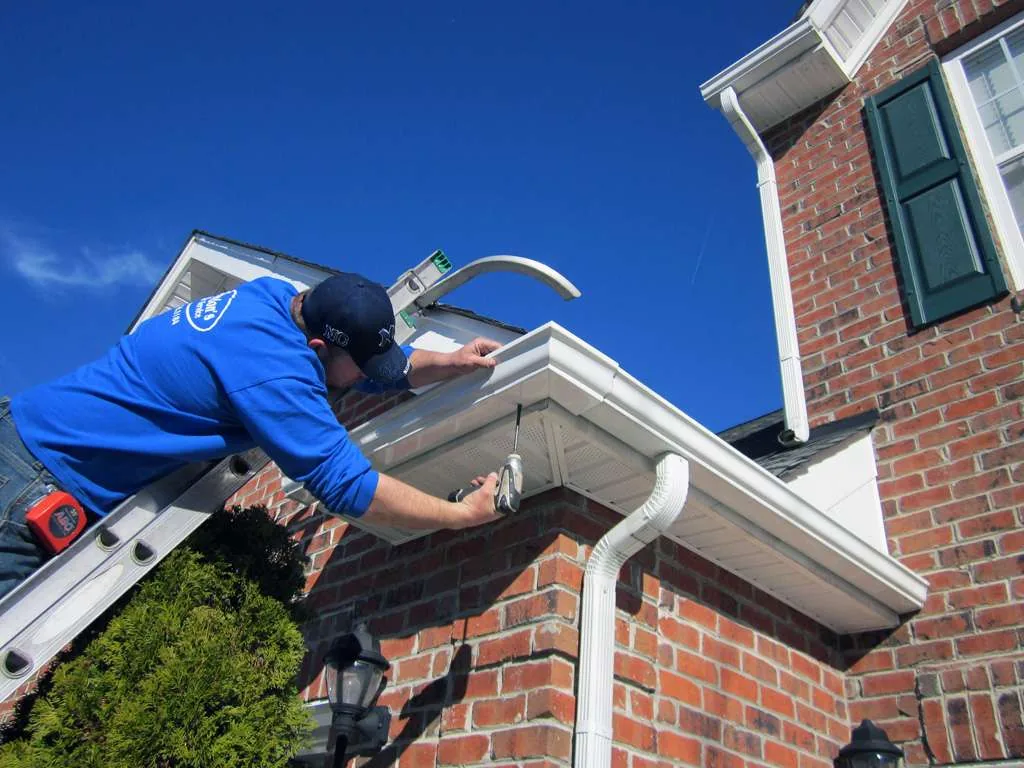
Technician on a ladder repairing and re-pitching a white residential gutter run
Sagging or back-pitched runs re-hung before they overflow again.
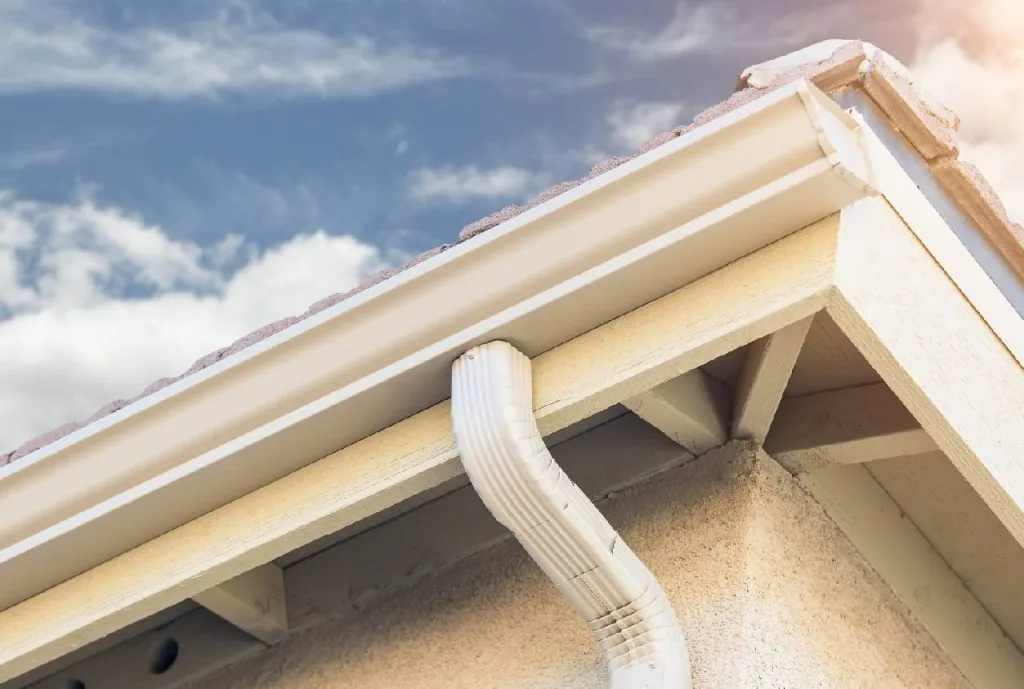
New white seamless gutter and downspout installed along a stucco roofline
Seamless runs formed on site to the exact length of your fascia.
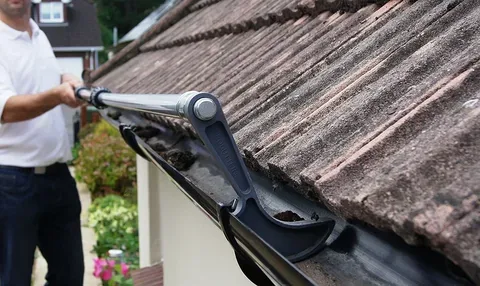
Homeowner clearing debris from a roof gutter with an extension tool
Twice-yearly cleaning is the maintenance that prevents the repair.

Seamless Gutters & Drainage by city

Soil, drainage and housing stock change from one NWA city to the next, and so does the right repair. Pick your city for the local detail.

Seamless Gutters & Drainage — Questions We Get Asked

What size gutters does my Northwest Arkansas home need?

Most homes here are well served by 6-inch K-style aluminum gutters with 3x4 downspouts, which handle our short intense storms without overshooting. Steeper roofs, long unbroken runs or large drainage areas sometimes need oversized 7-inch gutter. We measure roof area and pitch before quoting.

Are gutter guards worth the money?

On a lot with trees overhead, yes — they cut cleanings from twice a year to roughly every other year, and micromesh blocks pine needles and shingle grit that screen guards let straight through. On an open lot with nothing overhanging the roof you do not need them, and we will tell you so.

How far should downspouts discharge from the house?

At least four to six feet, and farther on hillside lots. Where grade will not allow it we bury solid drain line to daylight or to a pop-up emitter well away from the structure. Downspouts discharging at the wall are one of the most common causes of foundation movement we see.

Do you repair existing gutters or only install new ones?

Both. We install new seamless runs and we also re-pitch, re-hang, re-seal and clean existing systems. If your gutters overflow, sag or leak at the seams, that is frequently fixable without full replacement.

How often should gutters be cleaned?

Twice a year at minimum — late spring after pollen and seed pods, and late fall after the leaves drop. Homes under heavy tree cover or pine need quarterly attention. We offer maintenance plans so it happens on schedule instead of after the overflow damage.

Other services we provide

Not sure what your foundation actually needs?

Start with a free inspection. You get elevation measurements, photographs, a plain explanation of the cause and a fixed written price — with no obligation to hire us.