What Actually Happens During a Free Foundation Inspection
A step-by-step walkthrough of the hour a specialist spends at your house — what gets measured, what gets photographed, and what you should have in writing before anyone leaves.
Why 'free inspection' makes people suspicious
Homeowners are right to be a little wary of a free inspection from a company that also sells the repair. The incentive is obvious. So it is worth explaining exactly what a real inspection consists of, because once you know the steps you can tell within ten minutes whether the person in your crawl space is diagnosing a problem or building a quote.
A genuine inspection produces measurements. If nobody wrote down numbers, you did not get an inspection — you got a sales call.
Step one: the elevation survey
The single most important thing that happens is a laser elevation survey of the floor plate. A rotating laser is set up in the middle of the house and readings are taken on a grid across every room, usually every eight to ten feet, including closets and hallways.
That produces a contour map of your floor. It shows not just that a corner is low, but how much lower, and — critically — whether the low area is a smooth bowl (consolidation) or a sharp step (a specific failed footing or a plumbing leak washing out soil). Those two patterns get completely different repairs.
Ask to see the numbers. Any reputable contractor will hand you the grid.
Step two: crack mapping and interior symptoms
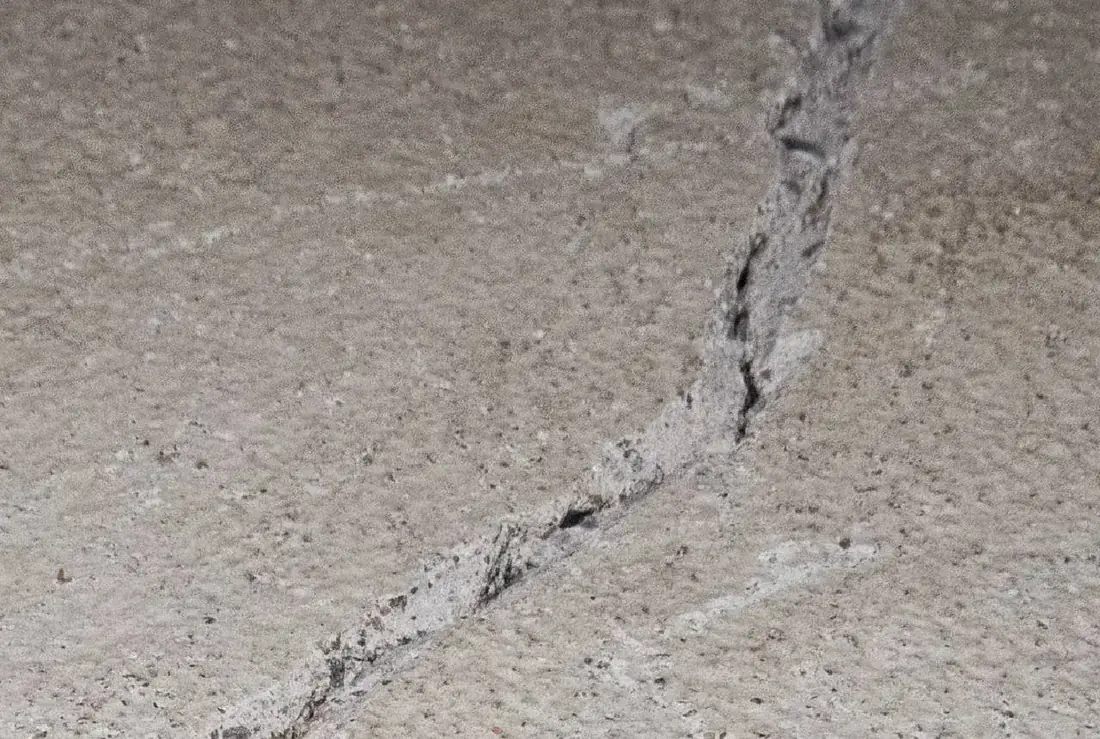
Next, every visible crack gets photographed and measured — width, direction, and whether the two faces have displaced out of plane relative to each other. A quarter-inch crack with no offset is a very different problem from an eighth-inch crack where one side has pushed out past the other.
Interior symptoms get logged at the same time: door reveals that have gone out of square, drywall cracks running diagonally from door corners, gaps opening at crown molding, and windows that no longer operate. These are how the structure tells you which direction it moved.
Step three: under the house
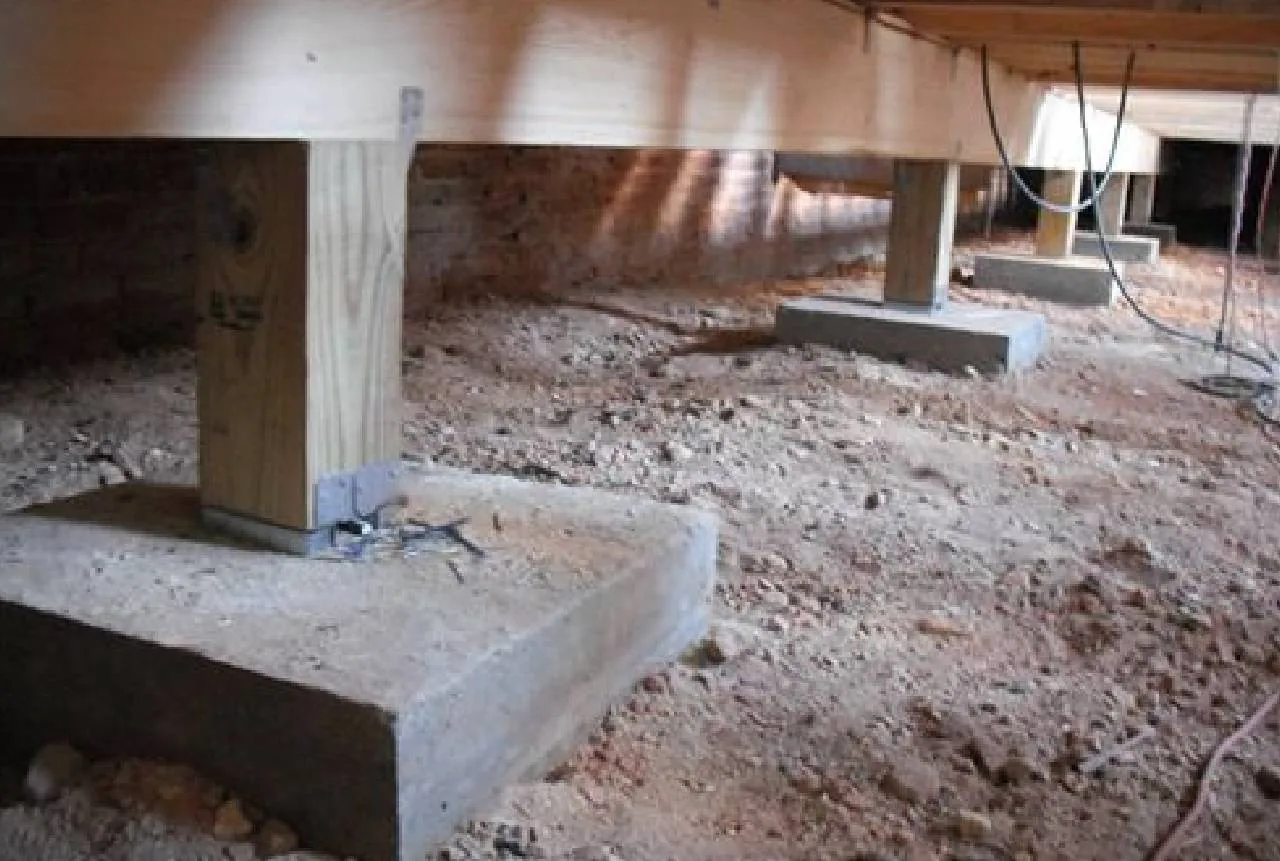
In a crawl space we are looking for standing water, moisture readings in the framing, rotted or insect-damaged joists and beams, collapsed or tipped piers, rusted-through ductwork, and a vapor barrier that is either missing or has been shredded by decades of animals and technicians.
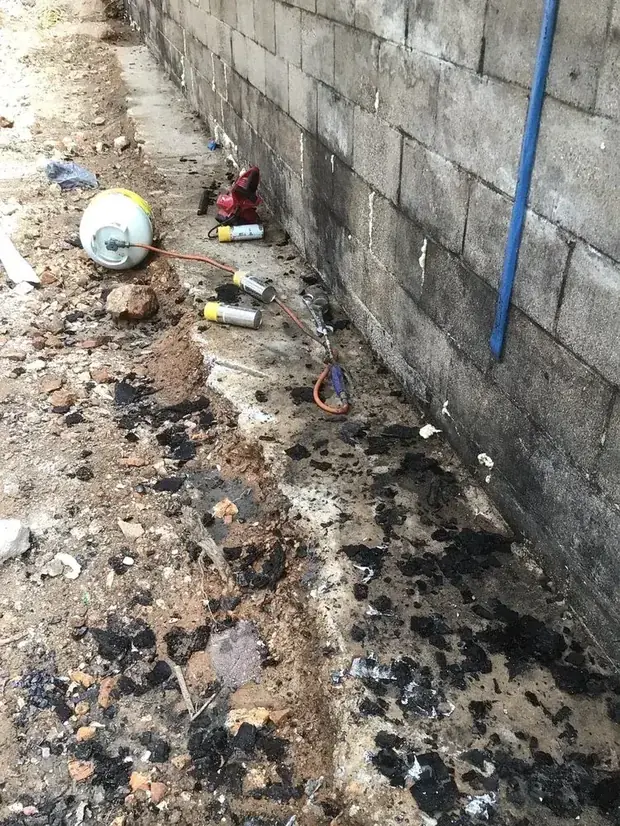
In a basement it is efflorescence patterns, staining lines that show past water levels, whether the cold joint is weeping, and whether the walls show horizontal cracking or inward deflection — which is soil pressure, not settlement, and a completely different repair.
Step four: the part most contractors skip
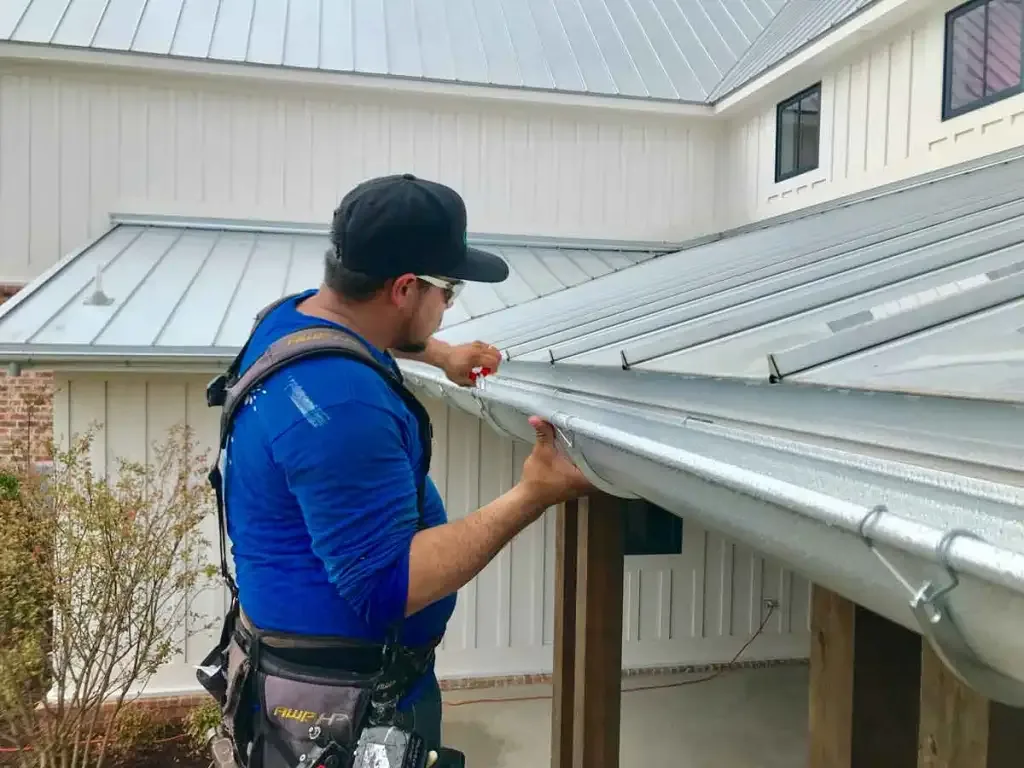
The exterior walk is where a lot of inspections quietly stop short, because it is where you find the reasons that cannot be solved with piers. We check the grade fall in the first ten feet from the wall, where every downspout discharges, whether the gutters are pitched correctly and clear, whether irrigation is running against the foundation, and how large trees are positioned relative to the settled area.
A surprising share of the movement we are called about traces back to two downspouts and a flower bed graded toward the house. If a contractor never walked your exterior, they do not know why your foundation moved — and neither will you.
What you should have in writing before they leave
You should receive: the elevation grid, photographs of the cracks with measurements, a plain-language explanation of the probable cause, a scope of work that separates structural repairs from cosmetic ones, a fixed itemized price, the warranty terms, and proof of license and insurance.
You should also, in a meaningful number of cases, be told that you do not need structural work at all. Plenty of cracks are shrinkage. Plenty of sloping floors have been sloping since 1961 and are not moving now. An inspector who has never once told a homeowner 'this is cosmetic' is not inspecting anything.
How to use the report
Get a second written estimate if the number is significant. Compare the elevation data, not the price — if two contractors measured the same house and disagree about where it dropped, one of them did not measure carefully.
If you want a documented inspection anywhere in Northwest Arkansas, we do them free with no obligation. Call (479) 225-4899 or request one online.
Want this looked at by someone who does it every day?
Free inspections across Fayetteville, Springdale, Rogers, Bentonville and Bella Vista — elevation measurements, photographs and a fixed written price, with no obligation.